Most digital marketing advice is written for companies selling products or services. It assumes a buyer who’s weighing price, features, and competitors — someone whose decision is primarily economic.
Nonprofit marketing operates on entirely different logic. The people you’re trying to reach aren’t buyers. They’re donors, volunteers, advocates, and community members. Their decision to give, to show up, or to share your cause isn’t transactional — it’s an expression of what they care about. And that changes almost everything about how effective digital marketing is built.
This guide is for nonprofit marketing directors and executive directors who’ve watched standard digital marketing advice fall flat, and want to understand what actually works — and why.
Why nonprofit digital marketing is a different discipline
In commercial marketing, you’re competing for budget. In nonprofit marketing, you’re competing for attention, belief, and generational giving decisions. The bar for trust is fundamentally different.
A donor giving $500 to your organization is making a values-based decision. They’re saying: this cause matters, this organization is credible, and this is the best place for my resources to go. That’s a much more complex decision than which streaming service to subscribe to — and it requires a different kind of marketing to support it.
The primary currency in nonprofit digital marketing is trust. Everything — your content, your visuals, your digital ads, your email program, your website — is either building trust or eroding it. That’s the filter every decision should pass through before it goes live.
What works differently for nonprofit digital ads
Non-profit organization ads have a significant structural advantage that most nonprofits underuse: the Google Ad Grant program gives eligible nonprofits up to $10,000 per month in free Google search advertising. That’s $120,000 in annual ad value that many organizations either don’t access or don’t use effectively.
The catch is that Google Ad Grants come with restrictions — ads can’t appear in the top positions, bidding is capped, and campaigns need active management to perform. Organizations that treat the grant as a set-and-forget resource get mediocre results. Organizations that treat it as a real marketing channel — with proper keyword strategy, landing page optimization, and ongoing management — can generate significant awareness and donor pipeline from it.
Beyond the Ad Grant, the principles of what works in nonprofit digital ads differ from commercial campaigns in a few key ways:
Mission over product. An ad that explains what your organization does will almost always underperform an ad that shows what changes because of what you do. The most effective nonprofit ads lead with transformation — what happens for a family, a child, a community — not with organizational description.
Specificity over scale. “Help us fight hunger” is harder to act on than “Feed a family of four for two weeks.” Specificity gives donors a purchase they can make in their minds before they give. It also builds trust — vague asks feel like organizational fundraising; specific asks feel like real need.
Social proof is essential. In nonprofit digital advertising, showing that other people — especially people the audience respects — have made this decision matters enormously. Testimonials, impact numbers, and recognizable partnerships are not decoration. They’re trust signals that lower the psychological cost of giving.
Building donor trust through content
Nonprofit digital marketing works best when it’s built around education and evidence, not asks. The organizations that build the deepest donor relationships publish content that helps their audience understand the problem they’re working on, not just the solution they’re selling.
A regional food bank that publishes an accessible explainer on food insecurity statistics in their community isn’t just doing PR — they’re building the knowledge foundation that makes a future donor feel informed and confident when they give. Content that teaches your audience to see the problem the way you see it is the most powerful kind of donor acquisition you can do.
The practical implication: your content strategy should have much more education and evidence than promotion. A mix of roughly 70% issue education and community impact, 20% organizational transparency and updates, and 10% direct asks tends to outperform the inverse over time. Most nonprofits invert this and then wonder why their audience feels fatigued.

How to make paid digital work with limited budgets
Paid digital can work for nonprofits even with constrained budgets — but the strategy has to match the constraints.
The most common mistake organizations make is spreading limited paid budgets across too many channels. A nonprofit with a $3,000 monthly paid digital budget trying to run Facebook ads, Instagram ads, Google search, and display retargeting simultaneously will get thin results in all of them. The same budget concentrated in one or two channels where the audience is most concentrated — often Meta for community-oriented causes, Google for issue-based search intent — produces measurably better outcomes.
Retargeting deserves special attention in nonprofit paid digital. Website visitors who didn’t give on a first visit are not lost — they’re warm. A well-constructed retargeting sequence that shows impact stories, testimonials, and specific asks to people who have already demonstrated interest in your cause consistently outperforms cold prospecting on return.
Email also punches above its weight in nonprofit digital marketing. The cost per dollar raised from email is typically lower than any paid channel, because the people on your list have already opted in to a relationship with you. A segmented email program — where major donors, recurring donors, and lapsed donors each receive messaging calibrated to where they are — is often the highest-ROI digital investment a nonprofit can make.
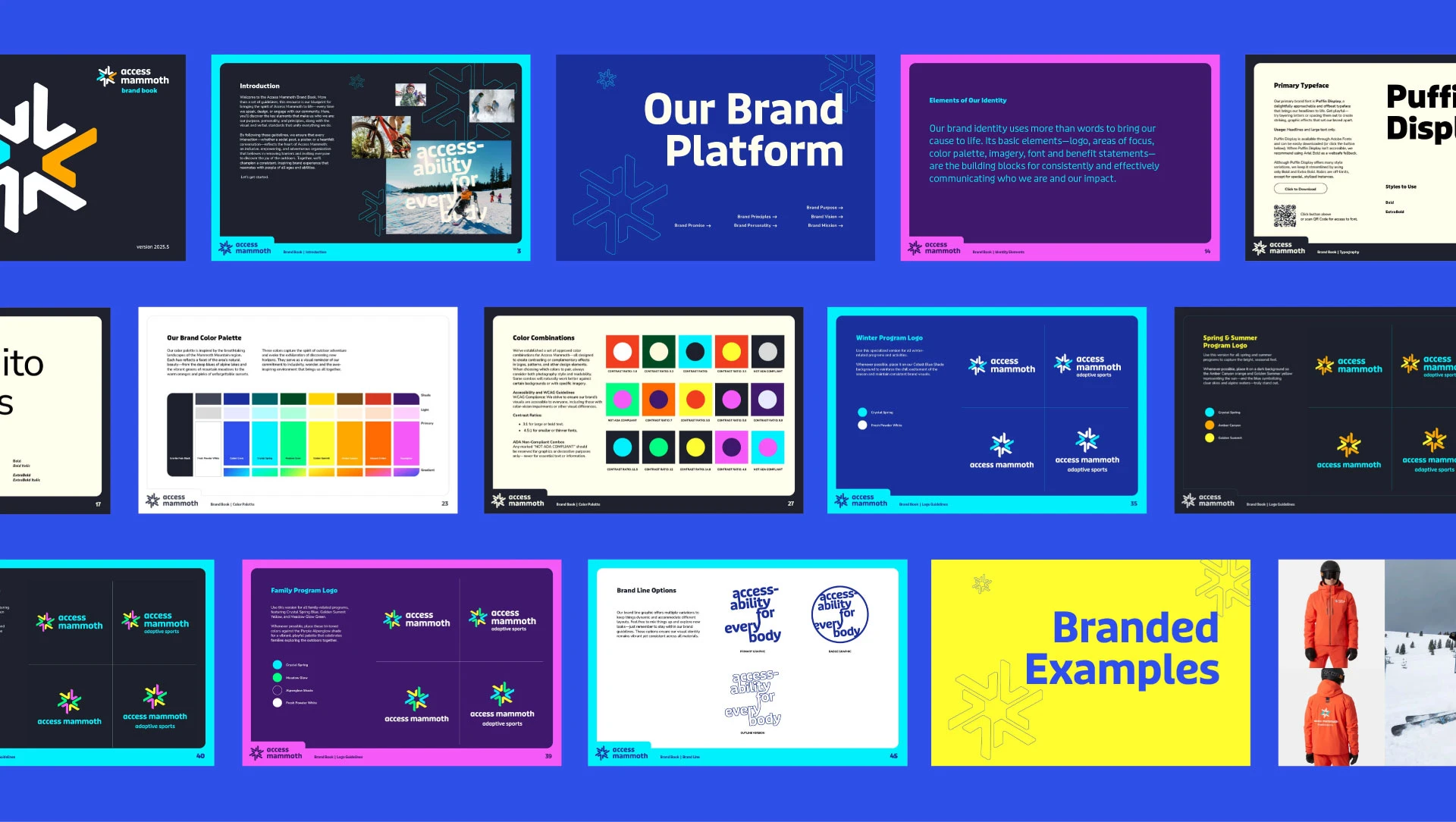
Why brand clarity matters more for nonprofits
In commercial marketing, brand clarity helps you stand out in a crowded market. In nonprofit marketing, brand clarity does something more critical: it earns trust in a landscape where donors have to choose between causes they all care about.
The causes your donors could support are not your competitors in any commercial sense, but they are competing for the same giving capacity. When a donor is deciding whether to give to you or to another organization working on issues they also care about, the clarity and credibility of your brand is often the deciding factor. Can they understand in thirty seconds what you do, who you serve, and why you’re the right organization to do it? If not, they’ll give to the organization they understand better.
This is especially true in digital channels, where attention is short and the decision to learn more or donate happens in seconds. A nonprofit brand that is visually inconsistent, tonally scattered, or unclear about its mission loses donors not because people don’t care — but because the organization didn’t make it easy enough to trust.

Where to focus first
For most nonprofits trying to improve their digital marketing, the highest-leverage first moves are: a Google Ad Grant audit (to make sure you’re capturing the free search traffic you’re entitled to), a donor email segmentation review (to make sure lapsed and prospective donors are getting different messages than active ones), and a website conversion audit (to understand how many people are arriving and not finding a clear path to give or get involved).
These aren’t the most exciting interventions, but they’re the ones that tend to move the numbers — because they close the gaps between the audience that already cares and the action you want them to take.
Digital marketing for nonprofits isn’t harder than commercial marketing. But it is different — and treating it the same is why so many organizations underperform relative to the belief their community has in their work.